
Science Education.
Travel & Photography.
Experiencias globales.
.png)


My next big project:
SynaptiFit
This all began with a frustration I couldn’t shake.
Every fitness app I’d ever used (or really, tried to use) was obsessed with the same thing: more. More sets, more reps, more volume, more days in the gym. I get it. That’s the instinct. If you want to build muscle and get stronger, you train harder and fatigue yourself to the brink of injury. Simple. Except it isn’t.
I kept running into this wall. Not physically, but intellectually. Because I’d spent enough time studying neuroscience to understand that the gym alone is not where gains actually happen. Muscle growth, strength adaptation, the neurological rewiring that makes you more coordinated and more powerful over time…it all happens during recovery. The workout is just the stimulus. Rest is where the body responds, rewires, and rebuilds stronger than before.
No app was treating it that way. So I decided to build one.
Upcoming Events
No hay eventos en este momento
Our Evolving Intelligence
The story of an ever-changing brain in an ever-changing world
Latest books
Live now on Amazon Kindle

Our Evolving Intelligence
The story of an ever-changing brain in an ever-changing world
Latest books
Live now on Amazon Kindle
Our Evolving Intelligence
The story of an ever-changing brain in an ever-changing world
Latest books
Live now on Amazon Kindle
The Biggest Threats to Global Health in the 21st Century
Placing climate change and noncommunicable diseases under the global health microscope
Latest books
Live now on Amazon Kindle

Live now on Amazon Kindle
Latest in The Media

World Cup 2026 Street Football @ Granville Street, Vancouver
Credit: CTV News Vancouver

Hosting Across STEM with YSI
Youth STEM Initiative's Podcast
The Latest Episode
Listen on:


MÁS RECIENTE


MÁS RECIENTE
MÁS RECIENTE
MÁS RECIENTE

MÁS RECIENTE

ÚLTIMAS PUBLICACIONES MEDIUM & SUBSTACK


ENLACES A PERFILES DE PUBLICACIÓN


Descargue y lea los libros electrónicos de Amirali Banani en los siguientes sitios internacionales


Barnes & Noble


Federación Nacional de Achats des Cadres


Tienda Mondadori Italia


Librerías Gandhi


Booktopia – Australia's Local Bookstore

楽天ブックス (Rakuten Kobo Japan)

TOP EBOOK REVIEWS


ACTITUDES DE PIANO RECIENTES


Amirali Banani actuando en la Escuela de Música de la UBC en Vancouver | 15 de mayo de 2022
Mozart - Marcha turca
Habiendo escuchado esta pieza una y otra vez en películas, recitales e incluso actuaciones de piano en la calle, decidí aprenderla durante la cuarentena en diciembre de 2020. Me tomó alrededor de 3 semanas aprenderla, aunque con una práctica intensa. La razón por la que estaba tratando de aprenderlo tan rápido era porque tenía que interpretarlo para el Concurso Internacional de Música Crescendo (CIMC) en enero de 2021. Sin embargo, lo que realmente me ayudó a aprenderlo rápidamente no fueron las horas de práctica, sino el método. Con la ayuda de mi instructor de piano, Oscar Liu, dividimos la canción en 3 fragmentos distintos con diferentes acordes y melodías. A partir de ahí, pasé aproximadamente una semana aprendiendo cada parte y finalmente lo armé todo al final de las 3 semanas de práctica. Por supuesto, no pude combinar los tres trozos en una sola pieza a la vez; Primero tuve que suavizar las transiciones entre los trozos y luego pulir la pieza para asegurarme de que estuviera en su mejor momento. Finalmente, grabé y envié mi actuación a Crescendo y, posteriormente, clasifiqué para tocar en el Carnegie Hall de la ciudad de Nueva York.
Chopin - Valse Op.69.1
Al igual que todas sus otras piezas, los valses (o valses) de Chopin son virtuosos y están marcados a veces con una expresión profunda que se convierte en sutileza al final de cada verso. Estas elegantes variaciones en la dinámica de los valses de Chopin son lo que los hace tan especiales y, en última instancia, lo que me atrajo a aprender esta pieza. Valse Op.69.1 es uno de los veinticinco valses que escribió Chopin, y uno de los dieciocho que han sobrevivido hasta el día de hoy. Aprender la pieza no fue particularmente fácil, principalmente debido a la sincronización de los acordes de la mano izquierda que se tocaban a intervalos irregulares en relación con la melodía. Para superar esta dificultad, simplemente usé un metrónomo para asegurar el ritmo adecuado. Parte de mi práctica también incluye ver a profesionales tocar la pieza que estoy tratando de aprender en YouTube. Utilizo las interpretaciones de esos profesionales como el estándar de oro que trato de lograr a través de la práctica repetida, y esto es particularmente útil cuando aprendo piezas como Valse Op.69.1 de Chopin.


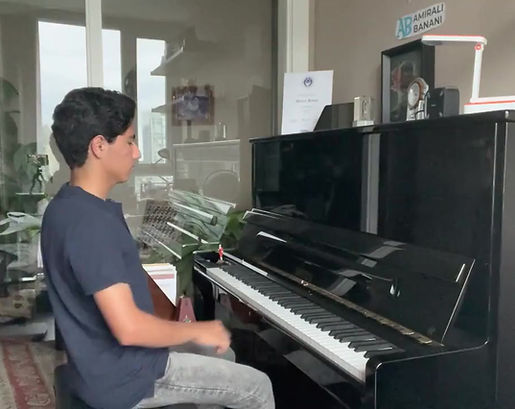
Beethoven - Sonata Op.49.1
Al igual que los valses de Chopin, las sonatas de Beethoven son piezas expresivas que pretenden transmitir una sensación de emoción y personalidad. Estos elementos cobran vida en la Sonata Op.49.1 de Beethoven con el uso de diferentes contornos, tonos y volúmenes. Mientras que convencionalmente la mano izquierda toca los acordes mientras que la mano derecha toca la melodía, el principal desafío al aprender esta pieza fue que la melodía a veces se gobernaba por ambas manos o se alternaba entre las manos. En cierto sentido, cada mano estaría tocando una melodía bastante distinta que parecía encajar bien para crear el hermoso contorno de la sonata. Aprender a jugar cada mano por separado fue bastante simple, sin embargo, jugar ambas manos juntas incluso después de dominar cada una fue sin duda un desafío. Tuve que prestar mucha atención a ambas manos para asegurarme de que estaba tocando las notas correctas y, al mismo tiempo, vigilar el ritmo para asegurarme de que se tocaban las notas correctas en el momento correcto. Con práctica moderada, me tomó un mes aprenderme completamente la pieza. Sin embargo, con más tiempo y esfuerzo, ciertamente se puede aprender en solo un par de semanas.
Paul de Senneville – Mariage d'Amour

"Mariage d'Amour" is a beautiful piano piece that has been captivating audiences for decades. This romantic melody was composed by Paul de Senneville and first released in France in 1979. It is characterized by its delicate and intricate fingerwork, which creates a soft and flowing sound that evokes feelings of love and passion. The song is typically played on a grand piano and features a series of arpeggios and runs that interweave to create a complex and highly emotive musical tapestry. Despite its technical demands, "Mariage d'Amour" is a favourite among piano players of all levels and has become a classic in the repertoire of romantic piano music. Whether played in a concert hall or in a private setting, this beautiful piece never fails to evoke feelings of love and tenderness in its listeners.
Learning this piece at first is not easy due to its variable pacing and chord progressions. Because of this, I found it very difficult to learn without using a metronome. To capture the true essence of the piece, it must be played with a romantic setting in mind. When playing, picture yourself sipping wine while enjoying a lovely sunset alongside the love of your life in the French countryside. If you can set your mind to such a setting at the piano, you will be able to play the song in the emotive, romantic fashion that it ought to be played in. I love to play this song every time I am at a piano and it is certainly one of the most fun and addictive pieces I have ever learned.
Chopin – Nocturne No. 20 in C# Minor

Chopin's Nocturne No. 20 in C# Minor is a poignantly beautiful and melancholic piano piece that is beloved by many classical music enthusiasts. It is often referred to as one of Chopin's most popular works, and for good reason. As the name suggests, the piece is written in the key of C# Minor, which gives it a rather dark and emotional quality. The left hand plays a simple arpeggiated accompaniment that creates a flowing and dreamlike texture, while the right hand plays a touching melody that is both lyrical and expressive.
The piece starts off quietly with subtle touches of the keys and gradually builds in intensity, with the melody becoming more pronounced and the accompaniment growing in complexity. Variations in the piece's dynamics create a strong sense of drama and emotion as the piece ebbs and flows between moments of quiet contemplation and passionate outbursts of expression.
One of the most challenging aspects of playing this piece is achieving a sense of balance between the two hands. The left hand must provide a steady and flowing accompaniment that is at times played at irregular intervals, while the right hand plays the melody with precision and feeling. It requires careful practice with a metronome and attention to small details in transitions between phrases, changes in dynamics, and readjustments in the tempo of the left-hand accompaniment in accordance with the varying speed and expressiveness of the right-hand melody to achieve the perfect balance.
FOOTBALL STATS & HIGHLIGHTS
BORN | JANUARY 27, 2006 TEAMS | FIVE
POSITION | WINGER, ATTACKING MID

ALL-TIME
FOOTBALL
STATISTICS (2015-2023)


TOP HIGHLIGHTS
