ESPERIENZE
ESPERIENZE
Five days that quietly rearranged everything
BRIGHTDALE BERLIN, BERLIN, GERMANY | MARCH 4-9, 2025
I’ve been trying to figure out how to write this ever since this experience. Every time I sit down, I keep coming back to the same sentence: it’s incredible how much five days can change you.

Brightdale class of 25’
So let’s start there.
The day is March 3, 2025. I boarded a flight from Seattle to Berlin. On paper, it was a questionable decision at first. My university schedule at first seemingly had barely any give. I had never been to Berlin. I was flying across the world for a startup bootcamp I’d heard about through a LinkedIn connection just a couple months prior. Someone I’d never met in person, in a city I’d never visited, for a program I only half-understood.
I went anyway. Because I’ve learned, slowly and stubbornly, that the moments which look like bad ideas on paper are often the ones that matter most.
The program was Brightdale: a global immersion experience that drops you inside some of the world’s most dynamic tech and startup ecosystems through intensive, boot-camp-style expeditions. Berlin was the first ever stop. I showed up with a carry-on, zero expectations, and a vague sense that something important was about to happen.
I was right.
How a LinkedIn message sent me to Germany
A few months back, I connected with Cesca Centini, Brightdale’s Founder’s Associate, from Italy. It was one of those routine LinkedIn interactions you almost scroll past, but turned into something great after she joined my organization, Youth STEM Initiative, and we started to work on a neuroscience projects + a ton of other stuff (a whole other story). She told me about the Berlin expedition, and something in the way she described it made me stop. Not the usual startup pitch energy. Something more genuine. A real invitation to something real.
Long story short…I told her my schedule was a nightmare and the program date coincides with my final exams that quarter. She encouraged me regardless, connected me with an amazing person called Lucabrando Sanfilippo (Brightdale’s Co-Founder) and left it to me. After much contemplation, a talk with Brando, filling up the application, doing some research, and negotiating with my profs to reschedule exams, here I was on the flight to Germany’s capital on a random Monday in March.
There’s a concept I keep returning to: surface area of luck. The idea is that luck isn’t random. It’s a function of how many interesting situations you put yourself in. Every new experience, every room you walk into, every stranger you say yes to: that’s you expanding that surface area. You can’t control what luck lands on you. You can control how much space you give it to land. That was a life-changing takeaway from this experience.
Brightdale Berlin was me expanding the surface area. And as it turned out, Berlin had A LOT to land.
What actually happened in those five days
I want to be very careful not to over-glamorize this, because the honest truth is that the most memorable parts weren’t the famous logos or the impressive venues that we visited across the city—even though there were plenty of those.
We were guests at Google. We visited a lab in a Berlin suburb doing cutting-edge research on nano enzymes, explained in real time by the scientists actually doing the work. There was a life coaching workshop that hit harder than I expected, the kind of session that quietly rewires how you think about the choices you’ve been putting off. Then at the end of an intense, saturated week, a meditation session that I (and I’m sure everyone else in the cohort) genuinely needed. The week kept giving us things to metabolize, and then gave us the space to metabolize them. That balance wasn’t accidental. It was designed beautifully by Brando, Cesca, and Andrea Parodi, also Brightdale’s Co-Founder.
But the real texture of the week was the founders we met from all the startups and companies we explored in Europe’s San Francisco.
Let me break it down for you in numbers:
19 hrs
with founders across biotech, fintech, VC, healthtech, and edtech
10 hrs
of dinners with real conversations about life, careers, and meaning
2 days
of workshops at Brightdale House in the heart of Berlin
15
incredible friends made from across Europe
Nineteen hours with founders is not a networking event. It’s something closer to being handed a window into how people actually think when they’re building things that don’t exist yet or that they’re ambitiously striving towards making a reality. The mental models. All the failures they talk about so openly. The specific way that someone who has launched three companies and wound down two of them speaks about risk-taking differently from anyone in a classroom ever could.
You start to notice patterns. The best founders weren’t the most confident or cocky people in the room. They were the most curious. They asked more questions than they answered. They were comfortable saying “I don’t know” in a way that felt like a strength rather than a gap. That observation alone has been quietly rearranging the way I carry myself since I came back home.
The dinners
If the daytime sessions were where I learned about the startup world, the dinners were where I learned about everything else.
group selfie (Jack Gallazzi, the photographer) at a Vietnamese restaurant
Something happens when you take a group of driven, curious people from across Europe (and America ig), put them around a table with good food and no agenda, and let the conversation go wherever it wants. It goes to the real stuff fast. We talked about what it actually feels like to be in your twenties and unsure of your direction. About how you know when you’re chasing the right thing versus just the impressive-sounding thing. About what happiness looks like when you stop performing it for other people and start actually asking yourself what you truly want in life.
Those weren’t conversations I expected to have at a startup bootcamp. But they were definitely the ones I’ll carry the longest.
The fifteen people I met that week are already the kind of friends where the chats can be active at midnight and the plans to visit each other are already half-formed. Joseph Perrotta, Luca covini, Eszter, Isaac Tolley, Marco Lomele, Giacomo Gallazzi, Kaan Durmaz, Manuel Martín Morante, Gabriele Santoro, Tiberiu-Aurelian Toca, Fotis Tsiroukis, Karol Wapniarski—all people from different countries, different fields, different ways of seeing the world, all striving for great things.
That kind of diversity in a room isn’t decorative. It genuinely changes the quality of thought.
The thing Barbara said
“Your unique point of view is your biggest strength.”
— Barbara Orsingher, Aware
Barbara said this during one of our sessions and I wrote it down immediately. It sounds simple. It isn’t.
We spend so much of our time trying to acquire the “right” knowledge, the “right” skills, the “right” credentials, as if the goal is to make ourselves interchangeable with a better version of everyone else. Sand down the rough edges. Optimize toward some imagined ideal candidate. Get good at the things you’re “supposed to be good at.”
But the things that make you specifically you—your particular combination of experiences, the strange angle you see problems from, the things you find funny, the things that make you unreasonably angry—that’s not noise to be filtered out. That’s the signal. That’s the whole thing. I’ve struggled for a long time to understand this in its full essence and to take it to heart the way I wanted to. But hearing it said out loud in a room full of people who clearly believed it landed differently.
I keep coming back to it.
What I learned
What I’ve written here aren’t polished takeaways. They’re things I wrote in my notes at the end of each day, when the conversations were still fresh in my mind.
-
1: Take the opportunity without hesitation. The version of you who waits for the perfect moment is protecting something that doesn’t need any protection.
-
2: The most valuable knowledge doesn’t live in books or on the internet. It lives in people who are in the middle of doing things. Go find them and ask real questions. It can change your life.
-
3: Building connections is everything. Not in a transactional way, but in the sense that the people you know shape the problems you get to work on and the person you become while working on them.
-
4: You don’t need to know everything before you start something. You need to find the right people to figure it out with. That’s a completely different problem and a much more solvable one.
-
5: Consistency will outlast talent, perfectionism, and short-term intensity every. single. time. This in particular is worth repeating to yourself more than once.
-
6: The people you surround yourself with are the single most important variable. More than your habits, your routine, or your tools. The people.
What Brightdale actually is
There’s a word I keep reaching for and that has inspired me since scrolling through the Brightdale website the first time: agora. The ancient Greek meeting place where ideas collided, where people argued and learned and changed their minds in public, where being part of the conversation was itself the education. Brando, Andrea, and Cesca built something like that. A modern agora, stripped of gatekeeping, designed so that students who wouldn’t get access to these rooms for another decade can walk into them now, early in their exciting careers.
Most of what I’ve gotten from university is theoretical. Knowledge delivered at arm’s length, filtered through (often boring) syllabi and assessment criteria. Brightdale was the opposite of that. It was messy and real and human in a way that lecture halls rarely ever are. I was learning from people who had skin in the game, who had built things and broken things and were in the middle of building again. That context changes everything about how the knowledge lands, what it’s used for.
I’m aware that experiences like this aren’t available to most students globally. The fact that Cesca, Brando, and Andrea have worked together to change that is something I’m genuinely grateful for. Not in the way you say it at the end of a thank you note, but in the way that makes you want to send others in the same direction.
Would I do this again? Don’t even ask.
Berlin · 03.04.25 – 03.09.25
p.s. remember when I said these are the kind of friends where the plans to visit each other are already half-formed? That did indeed come to fruition as I visited Cesca, Jack, Luca, Marco, and Andrea in Milan as well as Kaan and Fotis in Munich the following summer, reflecting on this beautiful experience we had a few months prior and catching up on what life has presented us with ever since.

Internship at Centre for Cardiovascular Innovation — Centre d’Innovation Cardiovasculaire (CCI-CIC)
VANCOUVER GENERAL HOSPITAL, VANCOUVER, BC, CANADA | MARCH 21-24, 2023


During spring break in 2023, I had the splendid opportunity to intern for a short period at the Centre for Cardiovascular Innovation, a clinical research centre operated by the University of British Columbia (UBC) Faculty of Medicine that facilitates regional and international clinical trials for cardiovascular researchers in BC investigating novel therapies for the treatment of certain cardiac conditions. This internship took place at Diamond Health Care Centre and Jim Pattison Pavilion at Vancouver General Hospital in Vancouver, Canada under the guidance of Dr. Brady Robinson. Below are some of the incredible activities that I did at CCI-CIC as well as my reflections on the experience.
ACTIVITIES
-
Overview of CCI and the innovative projects that CCI researchers are working on to revolutionize cardiac procedures. This was led by Dr. Brady Robinson, Clinical Research Project Manager at CCI-CIC, whose current research project — called COMPLETE TAVR (CTAVR) — focuses on essentially combining Transcatheter Aortic Valve Replacement (TAVR) and Percutaneous Coronary Intervention (PCI) into a single procedure that can help patients with symptomatic aortic stenosis (AS) get treated while managing their concomitant coronary artery disease (CAD). Currently, patients who have CAD and have had PCI done in the past can not receive a TAVR to treat their AS, but CTAVR is set to make it possible to do so. The study is a stratified randomized trial led by the UBC Faculty of Medicine / Vancouver General Hospital with participating medical research institutions across Canada and the United States. 4,000 patients and 100 participating institutions are required for the study (∼200 patients and 60 institutions have been incorporated as of March 2023), and once complete, CTAVR would be the largest study of its kind in the world. Its results will be published in the prestigious New England Journal of Medicine and could have tremendous implications if successful.
-
Observing cardiac catheterization procedures in the Cardiac Catheterization Laboratory (Cath Lab) at Vancouver General Hospital. In these procedures, catheters were inserted through the patients’ common femoral artery and pushed up to the heart to assess blood flow in the coronary arteries with angiography (using X-Rays and contrast dye injected by the catheter). The catheters were also used for PCI: a coronary revascularization procedure performed by the insertion of stents that open up blocked coronary arteries in patients with CAD.
-
Assessing the suitability of several patients to participate in the CTAVR research study using inclusion and exclusion criteria assessing the patients’ current cardiac health (based on measures such as heart rhythm, blood pressure, jet velocity, LVEF, AVA area and index, lesions in coronary arteries, and NYHA Functional Classification during physical activity) and medical history (which entails past cardiac or other related medical conditions and operations).
REFLECTIONS
For me, the most influential part of my work experience at the UBC Centre for Cardiovascular Innovation was acquiring first-hand insight into COMPLETE TAVR, the flagship research project that the team of CCI researchers is working on. Once again, this developing research study is aiming to develop a method to treat a condition known as aortic stenosis in patients with coronary artery disease using cardiac catheterization, which dismisses the need for surgical procedures. As part of this experience, I got to observe the day-to-day tasks of Dr. Brady Robinson (as a reminder, the Clinical Research Project Manager of CTAVR), who regularly hosted meetings with scientists from different health institutions across Canada and the United States who are participating in the study and sought to recruit new patients for the study based on a set of inclusion/exclusion criteria to determine whether they are suitable to participate in CTAVR. As previously explained, as part of one of my favourite activities, I played the role of a research coordinator as I got to review these criteria and decide whether a set of four patients with different cardiac conditions and medical histories were eligible for the study. And of course, I had the opportunity to observe live cardiac catheterization procedures in the Cath Lab at Vancouver General Hospital, which was a tremendous experience!
During my time at CCI, I learned a lot about how new research studies are formulated and developed through an extensive process of research design development, patient and researcher recruitment, and innovation — one that may take several years to prepare and perform. I also learned how and for what purposes cardiac catheterizations are performed to diagnose and treat cardiovascular conditions like coronary artery disease, as well as how modifications to this cardiac procedure can open up a whole new scope of opportunities to treat cardiovascular diseases without the need for risky surgical operations. After completing this work experience, I have developed an even greater understanding and passion for medical research.
The biggest challenge I had during my placement was probably in the Cath Lab at VGH as I tried to understand step by step what was going on during the cardiac catheterization procedures through the monitors in the control room that displayed the angiographic images and ECG recordings. The angiographic images were black and white and — before the dye was injected by the catheter to highlight the coronary arteries — showed the heart, its arteries and the surrounding parts as faded objects, which sometimes made it difficult to identify where the catheter was during the process and thus what exactly was happening at each stage of the catheterization. The way I overcame this challenge was by simply asking the specialists in the control room to explain to me exactly what I was looking at on the angiogram as well as what was going on at each step, whether it was the insertion of the catheter through the aortic arch and into the heart or the injection of iodine dye into the coronary arteries (a more visually prominent step). Always satisfy your curiosity by asking questions, which in turn will satisfy your thirst for knowledge!
CONCLUSION & APPRECIATION
My goals for this placement were to deeply explore some of the innovative research taking place at CCI and acquire experiential exposure to the process of research in medicine, which I would love to pursue in the future. I have certainly achieved these goals as I am now much more aware of the large-scale preparation that goes into making studies like COMPLETE TAVR possible.
I sincerely thank Dr. Brady Robinson for spending time off his busy schedule to show me around and teach me about CCI as well as the COMPLETE TAVR project and Dr. Jacqueline Saw for demonstrating first-hand how cardiac catheterizations work in the Cath Lab at VGH. This work experience certainly wouldn’t be so rewarding without them.
I laud the efforts being made by researchers at CCI-CIC to innovate in the field of Clinical Cardiology and wish them the greatest success in the future.
Learn more on the CCI-CIC website
TEDxYouth@SunsetBeach
VANCITY THEATRE, VANCOUVER, BC, CANADA | 9 SETTEMBRE 2022

Nel gennaio 2022 sono diventato direttore delle comunicazioni per un evento TED organizzato in modo indipendente dai giovani a Vancouver, in Canada, noto come TEDxYouth@SunsetBeach. L'evento, che si terrà a settembre dello stesso anno, aveva lo scopo di fornire a studenti ed educatori di Vancouver e oltre l'opportunità di mostrare alcuni dei loro incredibili lavori ed esperienze, esprimere opinioni su come risolvere problemi urgenti e condividere stimolanti personali storie. Dall'aumento dell'accesso alla tecnologia in Malawi mediante la spedizione di aule portatili dotate di computer, a un discorso influente su come risolvere la crisi degli oppioidi in Canada utilizzando lezioni dal Portogallo, i relatori dell'evento ci hanno francamente impressionato tutti.
Far parte del team che ha organizzato questo fantastico evento TEDx è stato davvero speciale. C'era molto da fare per preparare e mettere in scena l'evento, dalla ricerca di sponsor e l'aumento della pubblicità attraverso i social media all'acquisizione di una sede e di una squadra di ingegneri di scena. Tutto il duro lavoro alla fine è valso la pena, tuttavia, poiché abbiamo organizzato il nostro primo evento TED di successo al Vancity Theatre il 9 settembre, accogliendo una schiera accuratamente selezionata di relatori provenienti da Vancouver e da altre città come Montreal e Chicago. Il tema dell'evento di quest'anno era "Il mondo che cambia", un tema che integra il vero stato in cui si trova il nostro mondo dinamico in questo momento a seguito di eventi globali senza precedenti dalla pandemia di COVID-19 all'invasione russa dell'Ucraina._cc781905-5cde -3194-bb3b-136bad5cf58d_
Torneremo anche l'anno prossimo per il nostro prossimo evento. Per ulteriori informazioni su TEDxYouth@SunsetBeach, visitare il nostro sito Web tramite il seguente collegamento:TEDxYouth@SunsetBeach (tedxyouthsunsetbeach.com)

ESTATE ALL'HOPKINS 2022 @ JOHNS HOPKINS UNIVERSITY
BALTIMORA, MARYLAND, STATI UNITI | 11 - 22 LUGLIO 2022

Il mio periodo alla Johns Hopkins University per il programma pre-college Summer at Hopkins è stato, tutto sommato, un'esperienza che mi ha cambiato la vita. Non solo ho appreso preziose conoscenze e abilità cliniche che avrei applicato in futuro alla facoltà di medicina e oltre, ma ho anche fatto amicizia per tutta la vita da tutto il mondo. Inoltre, ho acquisito una visione straordinaria di com'è la vita universitaria nelle mie due settimane di vita e studio alla Johns Hopkins - e tutto quello che posso dire è che è ECCITANTE!
Nel febbraio 2022, ho scoperto il programma Summer at Hopkins attraverso una ricerca individuale e sono rimasto immediatamente affascinato dal catalogo di corsi offerti durante il programma. La Johns Hopkins University è sempre stata una delle scuole dei miei sogni, quindi l'ho vista come un'enorme opportunità per provare cosa vuol dire essere uno studente all'università mentre beneficia di un'esperienza educativa arricchente. Ho fatto domanda per un corso noto come Medical School Intensive, che era essenzialmente una mini simulazione della facoltà di medicina, e non potrei essere più soddisfatto della mia selezione.
Dal corso intensivo della facoltà di medicina, ho imparato preziose tecniche mediche come la tipizzazione del sangue, come prendere una flebo e procedure chirurgiche di base come la sutura. Inoltre, ciò che ha reso il corso davvero unico sono state le nostre escursioni giornaliere al Johns Hopkins Hospital, dove abbiamo avuto il privilegio di eseguire operazioni mediche simulate presso il loro Medicine Simulation Center. Ad esempio, siamo stati in grado di utilizzare un manichino con un battito cardiaco simulato per imparare a diagnosticare le malattie cardiache ascoltando i suoi diversi ritmi cardiaci con uno stetoscopio. In un altro giorno al centro di simulazione, abbiamo imparato come eseguire intubazioni su manichini di bambini e adulti utilizzando dispositivi medici reali. In poche altre occasioni, abbiamo avuto il privilegio di svolgere attività di laboratorio presso i laboratori di insegnamento universitario all'avanguardia della Johns Hopkins utilizzando attrezzature di laboratorio a cui normalmente non avremmo accesso al liceo.
Insieme a queste attività pratiche nel corso intensivo della Facoltà di Medicina abbiamo avuto anche interessanti lezioni che coprivano un'ampia varietà di argomenti in medicina, risultando in un perfetto equilibrio tra teoria e pratica. I nuovi concetti e le nuove tecniche che ho appreso nelle mie 2 settimane alla Johns Hopkins hanno ampliato profondamente la mia prospettiva del campo medico e di com'è vivere e studiare in una delle università più prestigiose del mondo. Consiglierei Summer at Hopkins agli studenti desiderosi di far parte di un'esperienza educativa arricchente durante l'estate, soprattutto se sono interessati alla medicina.
Personal Reflections
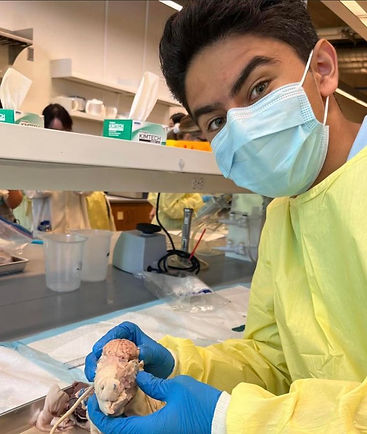
“Johns Hopkins University has always been one of my dream schools, so I saw this as a tremendous opportunity to experience what it’s like being a student at the university while benefiting from an enriching educational experience.
In the Medical School Intensive course I learned valuable medical techniques such as blood typing, how to take an IV, and basic surgical procedures such as suturing. In addition, what made the course truly unique was our daily excursions to Johns Hopkins Hospital, where we had the privilege of doing simulated medical operations at the Medicine Simulation Center.
The new concepts and techniques I learned in my 2 weeks at Johns Hopkins profoundly broadened my perspective of the medical field and what it’s like to live and study at one of the world’s most prestigious universities.” -Amirali on his experience with the 2022 Pre-College Course Medical School Intensive
Credit: JHU Summer at Hopkins via Instagram (@jhusummer)


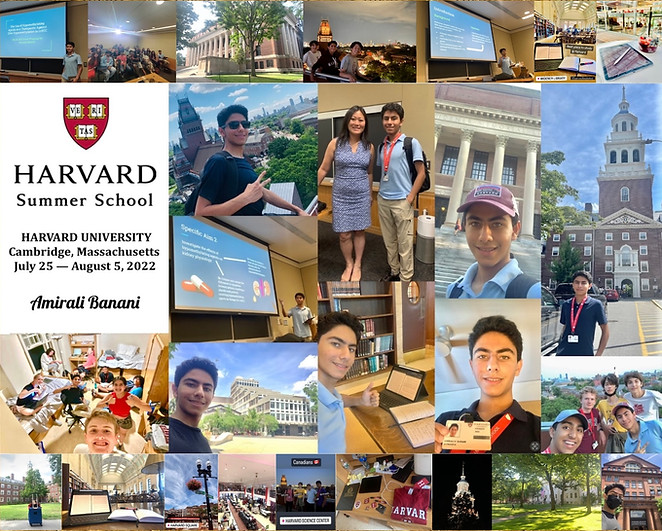
HARVARD SUMMER SCHOOL 2022 @ HARVARD UNIVERSITY
CAMBRIDGE, MASSACHUSETTS, STATI UNITI | 25 LUGLIO - 5 AGOSTO 2022